Buzzwords De-Buzzed: 10 Other Ways To Deliver Best Robot Hoover
The Best Robot Hoovers of 2023: A Comprehensive Guide
On the planet of home cleaning, robot hoovers, likewise called robotic vacuums, have actually emerged as highly efficient and practical tools that free homeowners from the drudgery of manual cleaning. They come packed with innovative technology, making them efficient in browsing intricate spaces and adapting to various floor types. As smart homes end up being more widespread, purchasing a premier robot hoover can improve a home's efficiency. This post checks out the best robot hoovers presently offered, describing their functions, pros, and cons.
Table of Contents
- Intro to Robot Hoovers
- Secret Features to Consider
- Navigation Systems
- Suction Power
- Battery Life
- Smart Technology
- Style and Size
- Comprehensive Review of the Best Robot Hoovers
- iRobot Roomba s9+
- Roborock S7
- Ecovacs Deebot Ozmo T8 AIVI
- Shark IQ Robot
- Eufy by Anker BoostIQ RoboVac 11S
- Comparison Table
- Regularly Asked Questions (FAQs)
Introduction to Robot Hoovers
Robot hoovers are automatic vacuum that carry out cleaning tasks with minimal human intervention. By employing Robotic Vacuum Cleaner and mapping technology, they can efficiently navigate rooms, maneuver around challenges, and even return to their docking stations for charging. These gizmos are increasingly interesting busy homes that seek both cleanliness and benefit.
Key Features to Consider
When trying to find the ideal robot hoover, consumers need to keep a number of functions in mind that can significantly influence performance:
Navigation Systems
- Laser Navigation: Robots equipped with laser sensors can create exact maps of your home, permitting efficient cleaning paths.
- Camera-Based Navigation: Some models use electronic cameras to acknowledge patterns and furniture, although they might not be as effective in dark spaces.
Suction Power
- Robot hoovers differ in their suction power, generally determined in Pascals (Pa). A greater Pa shows more powerful suction, making a robot more effective in dealing with animal hair, dust, and other particles.
Battery Life
- Depending on the size of the location being cleaned, battery life plays an important role. A lot of robotic vacuums provide anywhere from 60 to 150 minutes of cleaning per charge, with advanced models including self-charging capabilities.
Smart Technology
- Numerous contemporary robot hoovers feature smart abilities, allowing users to control them through smart devices or voice commands through smart home systems, providing included benefit and movement.
Design and Size
- The style of a robot hoover affects how it navigates and fits below furniture, which is essential for efficient cleaning.
Comprehensive Review of the Best Robot Hoovers
1. iRobot Roomba s9+
The iRobot Roomba s9+ is commonly thought about one of the very best robot vacuums on the marketplace. Its effective suction (approximately 40 times stronger than previous designs), advanced mapping technology, and ability to clear its dust bin automatically make it a top choice.
- Pros: Excellent suction power, self-emptying ability, smart home combination.
- Cons: High price point, can be noisy.
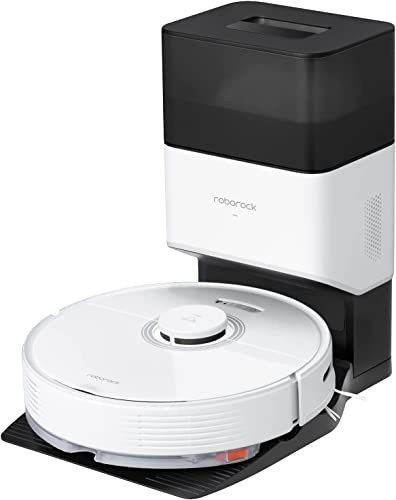
2. Roborock S7
The Roborock S7 combines vacuuming and mopping functions, making it a flexible cleaning device. Its sonic mopping innovation can scrub floorings as much as 3,000 times per minute, sticking out in hybrid cleaning.
- Pros: Strong suction, effective mopping capability, long battery life.
- Cons: Requires a cautious setup for efficient use.
3. Ecovacs Deebot Ozmo T8 AIVI
Ecovacs' Deebot Ozmo T8 AIVI is understood for its synthetic intelligence that helps it acknowledge and prevent barriers while cleaning. This design also provides both vacuuming and mopping features, guaranteeing comprehensive health.
- Pros: AI navigation, integrated mopping, high-capacity battery.
- Cons: Can be complicated to set up.
4. Shark IQ Robot
The Shark IQ Robot features a self-emptying base for included convenience, making it easier to manage pet hair and large particles. It supports scheduling and provides strong suction features for effective cleaning.
- Pros: Self-emptying, affordable, strong performance.
- Cons: Struggles with cleaning corners effectively.
5. Eufy by Anker BoostIQ RoboVac 11S
For those on a budget, the Eufy BoostIQ RoboVac 11S offers strong efficiency. This slim robot vacuum is best for accessing tight spaces and functions BoostIQ technology to increase suction when required.
- Pros: Budget-friendly, quiet operation, compact design.
- Cons: Lack of smart functions, limited mapping abilities.
Comparison Table
Robot Hoover
Suction Power (Pa)
Mapping Technology
Battery Life
Price Range
iRobot Roomba s9+
2200
Smart Mapping
Up to 120 minutes
₤ ₤ ₤ ₤
Roborock S7
2500
Laser Mapping
Approximately 180 min
₤ ₤ ₤
Ecovacs Deebot Ozmo T8 AIVI
1600
AI Navigation
Approximately 200 minutes
₤ ₤ ₤
Shark IQ Robot
1000
Self-Mapping
As much as 90 min
₤ ₤
Eufy RoboVac 11S
1300
Random Path
Up to 100 min
₤
Frequently Asked Questions (FAQs)
1. How do robot hoovers work?
Robot hoovers use a combination of sensors and mapping technologies to browse spaces, avoid challenges, and tidy efficiently. They normally have rechargeable batteries, allowing them to run autonomously and go back to the charger when required.
2. Are robot vacuums reliable on carpets and hard floors?
Yes, lots of contemporary robot vacuums are created to adapt their suction power based on the kind of surface. Designs like the iRobot Roomba s9+ and Roborock S7 are especially effective on both carpet and difficult floors.
3. Do robot hoovers require much upkeep?
Robot vacuums require basic upkeep such as emptying the dustbin, cleaning the brushes, and sometimes examining the sensing units for debris. A lot of reliable brands guide users on routine upkeep.
4. Can I manage my robot vacuum with a mobile phone?
The majority of new models include smart innovation that permits you to manage them through a companion app or under the voice command of smart home assistants like Alexa or Google Assistant.
5. What is the life expectancy of a robot hoover?
On average, a robot vacuum can last between 3 to 5 years, depending on use, upkeep, and the particular model. Top quality models frequently include service warranties that can extend this duration.
Choosing the best robot hoover includes examining features such as suction power, navigation, battery life, and whether you wish to integrate smart technology into your cleaning routine. Designs such as the iRobot Roomba s9+ and the Roborock S7 stand out for their robust capabilities, ensuring that your home remains clean with minimal effort. Eventually, purchasing a robot hoover can transform your cleaning experience, enabling you to concentrate on what genuinely matters while preserving a spotless living environment.